
The image that captured the world’s attention was not the golden goal itself, but a tear-filled face in the stands. When Jack Hughes scored the overtime winner to secure Olympic gold for Team USA, the arena erupted. Yet within minutes, a photograph of his mother, Ellen Hughes, overwhelmed by emotion, began circulating online. Pride, fear, and disbelief were written across her face as she watched her son endure brutal hits, lose teeth, and still deliver one of the most unforgettable moments in American hockey history.
Jack Hughes had already been playing through visible pain before the decisive overtime sequence. Earlier in the game, he absorbed a crushing check along the boards that sent him sprawling onto the ice. Cameras caught blood on his jersey as he skated to the bench, where medical staff quickly attended to him. According to team sources, he lost multiple teeth on the play but refused extended treatment, insisting he was staying in the game no matter the cost.
From the stands, Ellen Hughes witnessed every second. Spectators seated nearby later described her reaction as a mixture of terror and unwavering belief. When Jack went down after the hit, she reportedly covered her mouth in shock. Yet when he returned to the ice, stitched up and determined, her expression shifted from fear to focused anticipation. The viral image captured that emotional collision in a single frame, turning her into an unexpected symbol of Olympic motherhood.
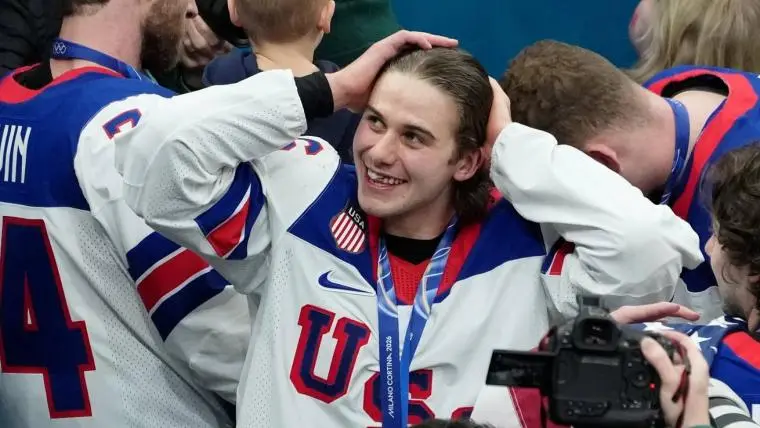
Inside the locker room during the intermission, teammates have since revealed that Hughes barely spoke about the injury. One player shared that Jack simply said he was fine and asked about the next shift. Coaches confirmed that medical personnel offered stronger pain management options, but Hughes declined anything that might dull his awareness. His priority, according to insiders, was maintaining sharpness in case a decisive opportunity presented itself.
That opportunity arrived in overtime. With the game tied and tension suffocating the arena, Hughes intercepted a pass in the neutral zone and accelerated past two defenders. Despite the earlier hit, his skating appeared explosive. He cut inside, released a quick wrist shot under pressure, and the puck found the back of the net. The horn sounded, teammates flooded the ice, and the United States secured Olympic gold in a moment that will be replayed for decades.
What viewers did not immediately see was the silent exchange between Jack and his mother after the goal. According to family friends present at the game, he searched the crowd as celebrations unfolded. When he spotted her, their eyes locked briefly before he was swallowed by teammates. Ellen later told close acquaintances that in that instant, she felt both overwhelming pride and a wave of relief that her son was still standing.
The National Hockey League’s official social media account posted the photograph of Ellen Hughes minutes later. The image spread rapidly, amassing millions of views and comments. Fans praised her visible emotion as a reminder that behind every elite athlete stands a family that shares in both the sacrifices and the triumphs. The picture transcended sports, resonating with parents who recognized that blend of fear and pride.
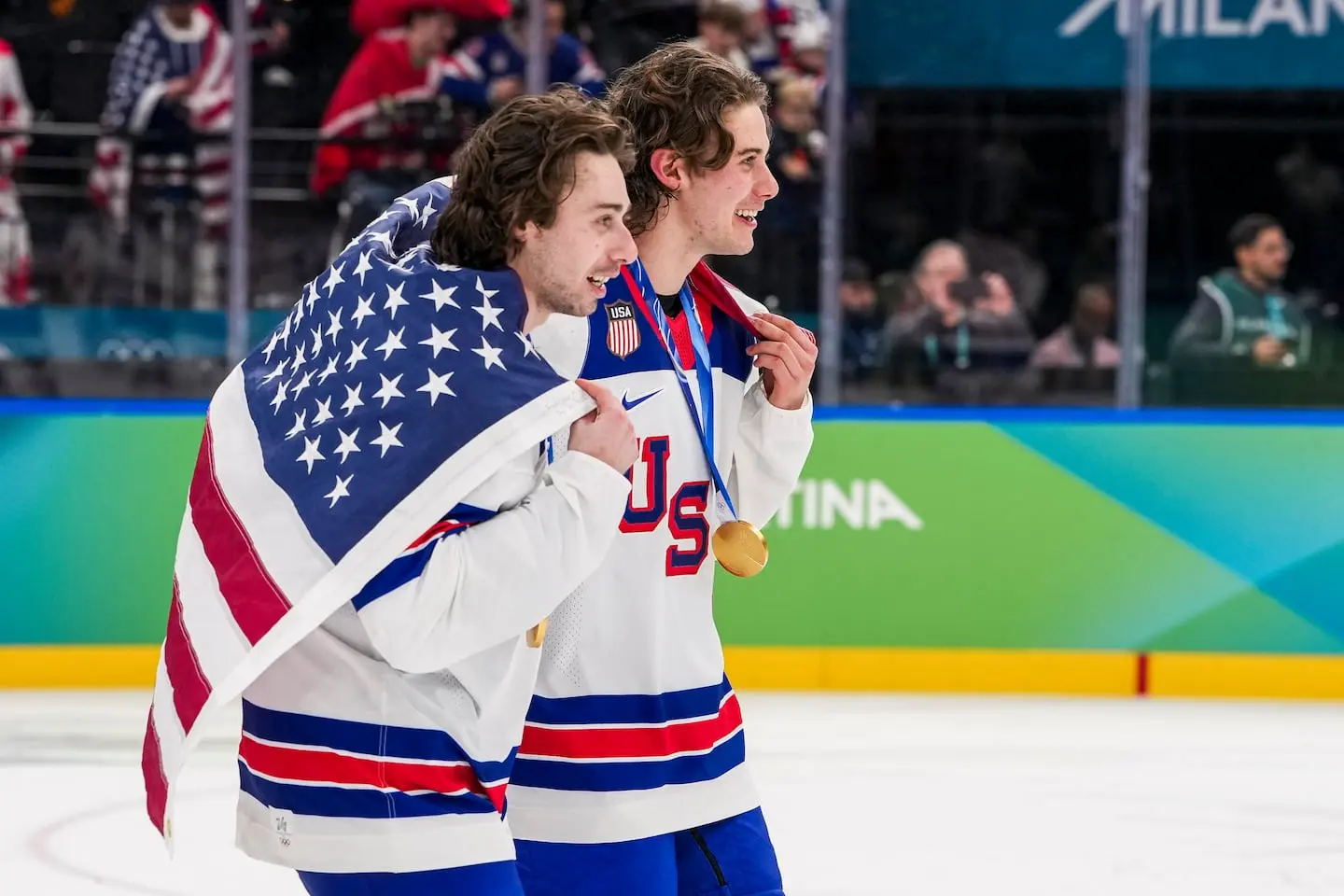
Sources close to the Hughes family revealed that the journey to that Olympic moment was far from easy. Jack’s path to international stardom included relentless training, early mornings, and years of travel across North America. Ellen and her husband were fixtures at rinks throughout his childhood, often driving hours for tournaments. Friends say she rarely missed a game, no matter the distance, weather, or scheduling strain.
After the gold medal ceremony, reporters attempted to capture Ellen’s thoughts. Though visibly emotional, she kept her comments brief in public. Privately, however, she reportedly admitted that seeing her son take such a violent hit was one of the hardest moments of her life. She confessed to fearing not just for the game’s outcome, but for his long-term health. That vulnerability added depth to the viral narrative.
Teammates later disclosed that Hughes joked about his missing teeth in the locker room, attempting to lighten the mood. Yet several acknowledged that his resilience inspired them. One veteran player reportedly said that when they saw Jack return to the ice bleeding but determined, it erased any hesitation they might have felt. His willingness to endure pain elevated the team’s collective resolve in overtime.

Coaches also provided insight into the strategic decision to keep Hughes in play. They evaluated his condition carefully, balancing risk and reward. Ultimately, they trusted both the medical staff’s assessment and Hughes’ own insistence that he was capable. That trust paid off in the most dramatic fashion possible, validating a choice that could have been scrutinized had the outcome been different.
As celebrations continued, the photograph of Ellen Hughes became emblematic of the human drama behind Olympic competition. Sports psychologists have since commented that such raw parental reactions highlight the unseen emotional labor families endure. Athletes carry national expectations, but parents carry silent anxieties that rarely receive attention until a moment like this exposes them to the world.
The golden goal itself will be etched into Olympic lore, but the viral image ensures that the story extends beyond the ice. It captures the interconnectedness of sacrifice, resilience, and love. Jack Hughes delivered a performance defined by courage and skill, yet it was his mother’s tearful reaction that reminded millions why sports matter. In that frozen snapshot, the brutality of the game and the beauty of triumph collided, creating a memory that transcends medals and statistics.