
“The doctors did everything they could, but…” AFL legend Neale Daniher has passed away at age 65 after a 13-year battle with MND, leaving the AFL community in deep sorrow as heartbreaking details of his final moments are revealed…
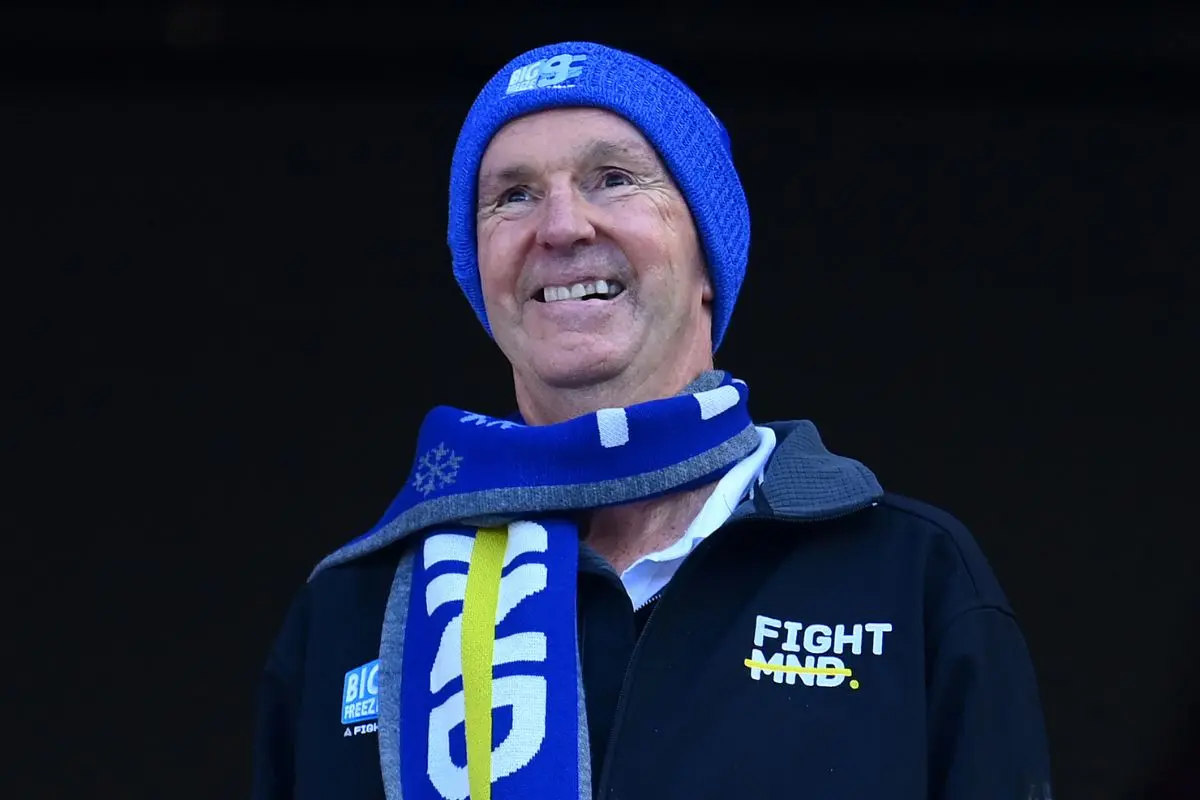
The Australian football world is in mourning following the passing of one of its most beloved and resilient figures. Neale Daniher, the former Essendon champion, Melbourne coach, and tireless campaigner against motor neurone disease, died peacefully at his Melbourne home on Monday, 25 May 2026. He was 65. Surrounded by his wife Jan, their four children Bec, Ben, Lauren and Luke, and his grandchildren, Daniher slipped away after defying medical expectations for more than a decade.
His family’s heartfelt statement captured the profound loss: “We’re heartbroken to share that our much-loved husband, Dad and Poppy, Neale Daniher, passed away at home, surrounded by his family. We will forever remember him for the lasting impact that he has made on us all. He has inspired, he has loved, he has lived, and it would only be fitting to finish with his words — Play On.”
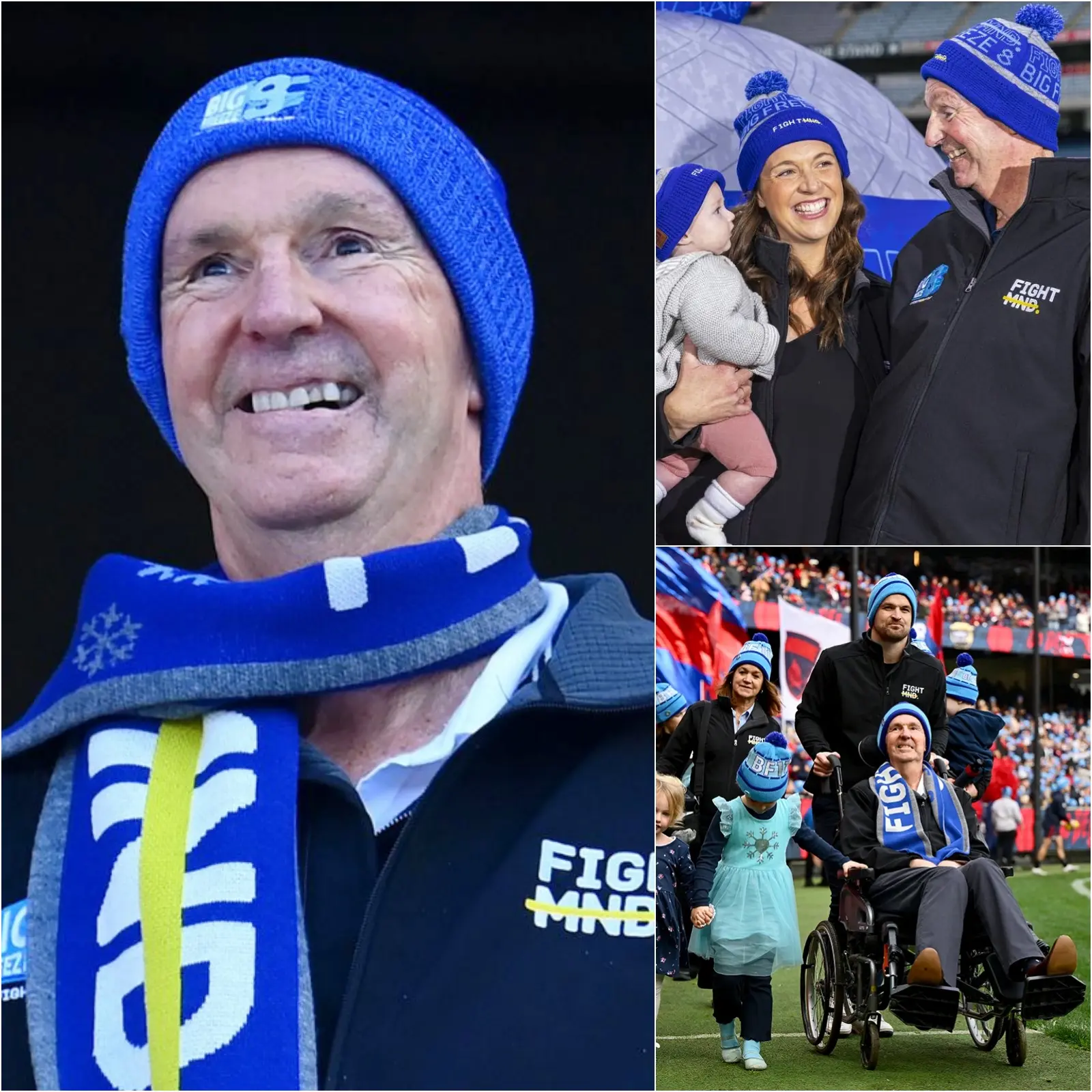
In the final days, as the relentless progression of MND took its toll, medical teams, nurses, carers and specialists worked around the clock to ease his suffering and maintain his dignity. They did everything they could. Yet even the most dedicated professionals could not halt the disease that Daniher himself had long called “the Beast.” The details that have emerged paint a picture of quiet courage rather than dramatic struggle. In his last moments, those closest to him recall the same quick wit and cheeky grin that defined him throughout his 13-year fight.
He remained, until the very end, the fighter who refused to wave a white flag.
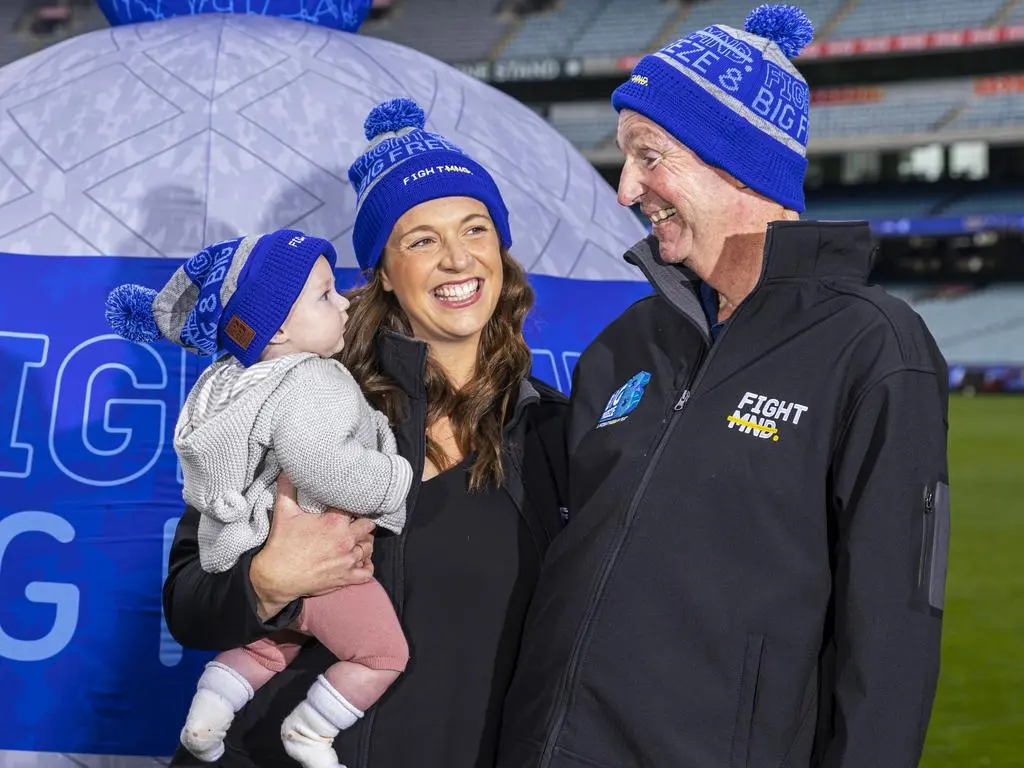
Born on 15 February 1961 in West Wyalong, New South Wales, Daniher grew up in a large Catholic family as one of eleven children. Football was in his blood. He and three of his brothers — Terry, Anthony and Chris — would later make history as the first quartet of siblings to play together in a VFL/AFL match for Essendon in 1990. Neale’s own playing career with the Bombers spanned 1979 to 1990.
Despite being plagued by devastating knee injuries that required multiple reconstructions and sidelined him for years, he still managed 82 games, won the club’s Best and Fairest in 1981, and was appointed captain in 1982 at just 21 — though injury prevented him from ever leading the team onto the field. Those who played alongside him remember a fierce competitor with a brilliant football mind and natural leadership qualities.
After retiring, Daniher transitioned seamlessly into coaching. He served as an assistant at Essendon under Kevin Sheedy during the 1993 premiership era, then at Fremantle, before taking the senior role at Melbourne in 1998. Over 223 games in charge of the Demons — the third-most in club history — he guided the team to the 2000 AFL Grand Final, multiple finals appearances, and a period of genuine competitiveness. Nicknamed “The Reverend” for his thoughtful, engaging style, he also boosted membership and deepened the club’s connection with supporters.
Later roles as general manager of football at West Coast rounded out a distinguished career in the game he loved.
It was in 2013, while at West Coast, that Daniher first noticed troubling symptoms. The diagnosis of motor neurone disease came that year, though he kept it private until stepping down from his role and going public in August 2014. Doctors gave him the standard prognosis of two to three years. He lived more than four times longer. Rather than retreat, Daniher chose to fight publicly and relentlessly. In 2014 he co-founded FightMND, a charity dedicated to raising awareness and funding research into the disease.
The flagship Big Freeze event — where celebrities and football stars plunge into icy tubs at the MCG — captured the nation’s imagination and has since raised well over $117 million for vital research projects. The annual King’s Birthday clash between Melbourne and Collingwood, now known as the Neale Daniher Trophy match, became a centrepiece of the campaign.
Even as his body weakened, Daniher’s spirit never dimmed. Named Victorian of the Year in 2019 and elevated to Officer of the Order of Australia in 2021, he reached the pinnacle of national recognition when he was named 2025 Australian of the Year.
Unable to speak on stage, he delivered a pre-recorded message that moved millions: “I chose to fight because if I didn’t, how could I expect anyone else to? I chose to hope because I believe in the decency and generosity of Australians… To everyone who has bought a beanie, donated a dollar, or spread the word — thank you. You are proof that when Australians unite, nothing is impossible.”
Prime Minister Anthony Albanese led the national outpouring of grief, describing Daniher as “a great Australian” whose selflessness and bravery inspired the country. AFL chief executive Andrew Dillon called his passing “a devastating loss” for the entire football community.
Essendon president Andrew Welsh said he would “forever be a beloved Bomber” and “one of the most remarkable people our game has ever produced.” Melbourne president Steven Smith noted that Daniher’s courage “transcended the football field” and that he remained “driven by helping others, right until the very end.” Victorian Premier Jacinta Allan confirmed that the state will honour him with a state funeral in the coming weeks — a fitting tribute to a man whose impact stretched far beyond the boundary line.
The AFL community has rallied in extraordinary ways. Tributes have poured in from every club, past and present players, coaches and supporters. Many have shared personal stories of how Daniher’s humour, humility and determination touched their lives. His autobiography and countless interviews revealed a man who found opportunity in suffering and who believed deeply that a cure would one day be found. The next Big Freeze, scheduled for 8 June at the MCG, will now serve as both a celebration of his legacy and a renewed call to continue the fight he championed for so long.
In the end, it was not the final whistle that silenced Neale Daniher, but the cruel reality of a disease that spares no one. Yet those who knew him insist his voice will echo for generations. Through the millions raised, the awareness generated, the research advanced and the hope kindled in countless families facing MND, his “Play On” spirit lives on. The doctors, nurses and carers did everything humanly possible. The Beast eventually claimed its fighter.
But in losing Neale Daniher, Australia gained an enduring example of courage, love and the extraordinary power of one person to change the world for the better.