
JUST IN: The AFL has revealed its stance on the controversial Nick Watson no-goal call last night. It comes after an AFL legend labelled the decision “pedantic”, with the Hawks formally tabling a ‘please explain’ with the league.
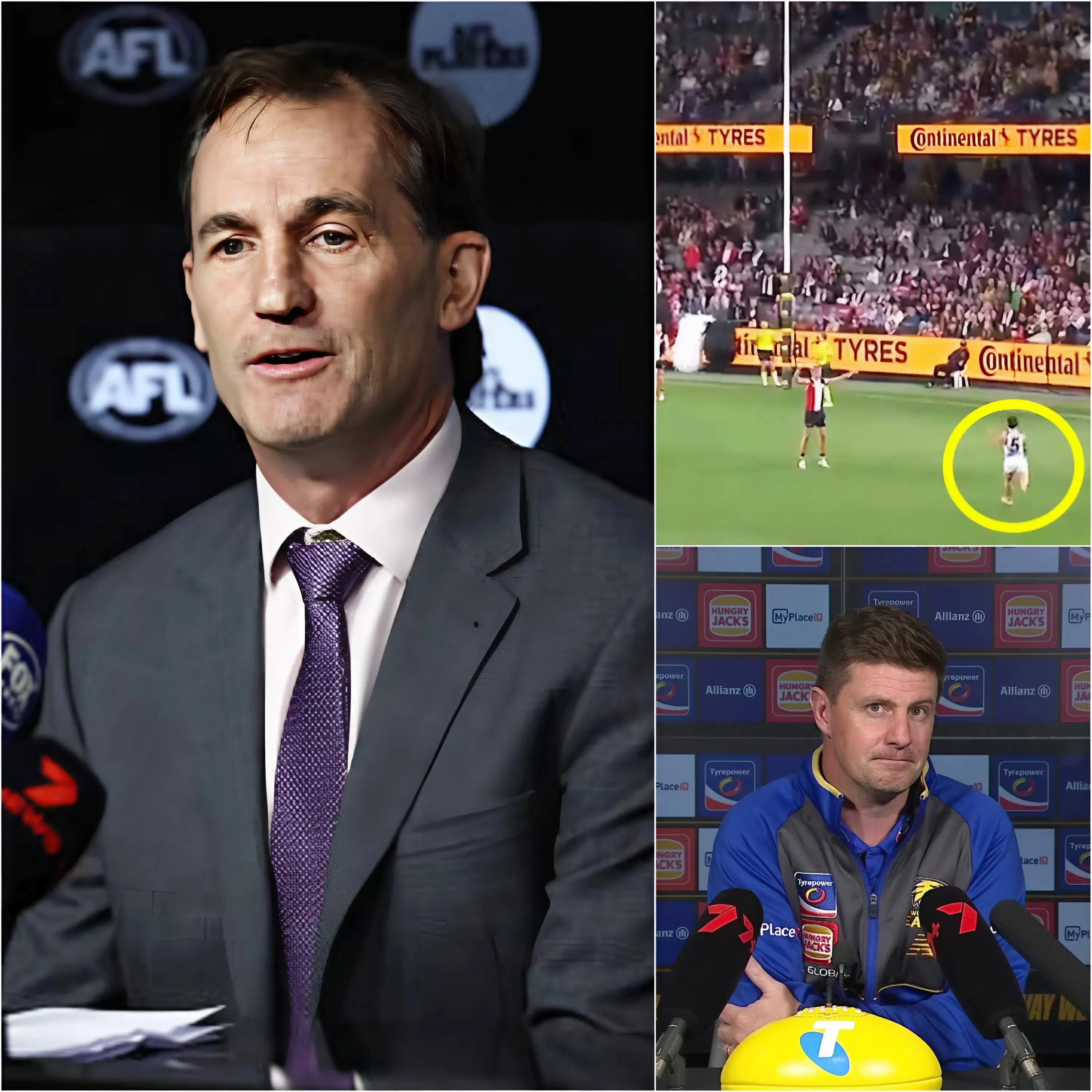
The AFL has backed its umpires without reservation after a contentious decision denied Hawthorn forward Nick Watson a goal in the final seconds before half-time against St Kilda last Thursday night at Marvel Stadium. The league’s firm statement arrived the following afternoon, confirming that the call by umpire Brent Wallace was correct and that the Hawks’ request for clarification had been addressed directly with both clubs.
What began as a moment of confusion in a one-sided contest has quickly become one of the most talked-about umpiring incidents of the 2026 season, splitting opinions between those who see strict rule enforcement and those who believe common sense was left on the bench.
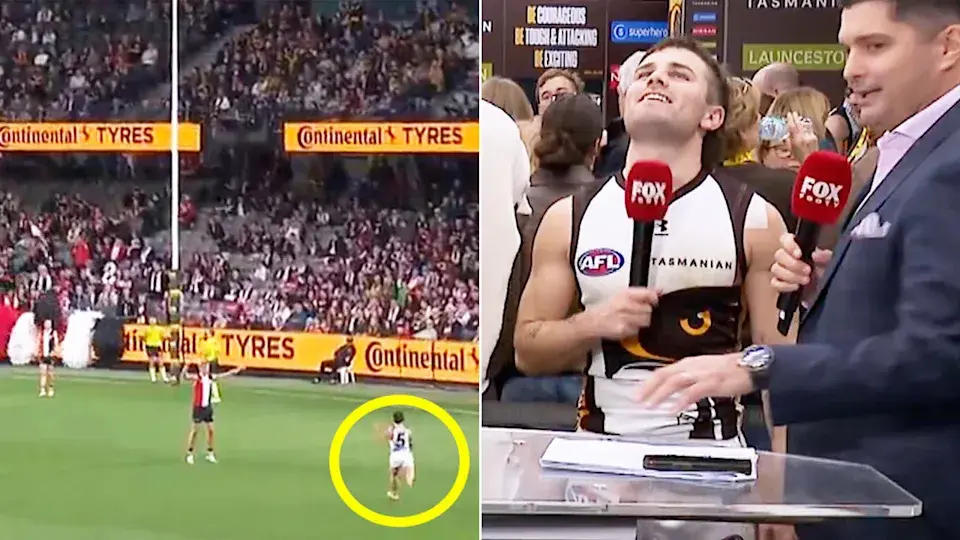
The Hawks had been dominant from the opening bounce. They piled on goals in waves while St Kilda struggled to find any rhythm, managing just a solitary behind in the first half. Watson, the exciting small forward who has lit up the competition this year with his speed, craft and finishing, was central to Hawthorn’s momentum. He had already contributed meaningfully before the controversial moment arrived. With the siren sounding to end the second term, the ball found its way to Watson for a set shot from a tight angle on the flank.
The 21-year-old composed himself, began his approach and let fly with what looked for all the world like a clean, accurate kick that split the middle. The Hawthorn players and supporters erupted in celebration. The scoreboard briefly reflected the score. Then came the correction.
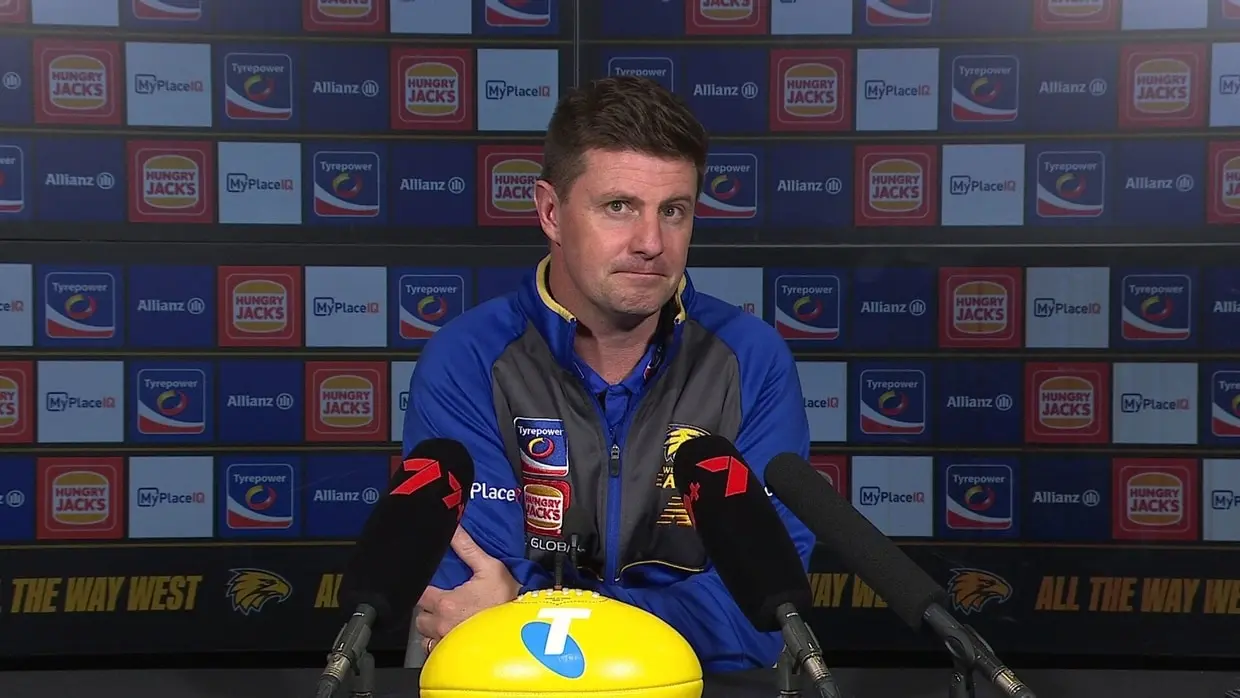
Umpire Wallace, positioned directly behind the kick, had already signalled play-on. His ruling was that Watson had moved off his designated line to the right during his run-up and had not kicked the ball over the man on the mark. Under the laws, that renders the kick invalid when taken after the siren. Replays showed a very small deviation, described by many observers as little more than a slight natural arc or perhaps half a step. Watson himself later said he believed he had run as straight as possible.
The margin of error appeared minuscule, yet the whistle had blown and the goal was scrubbed.
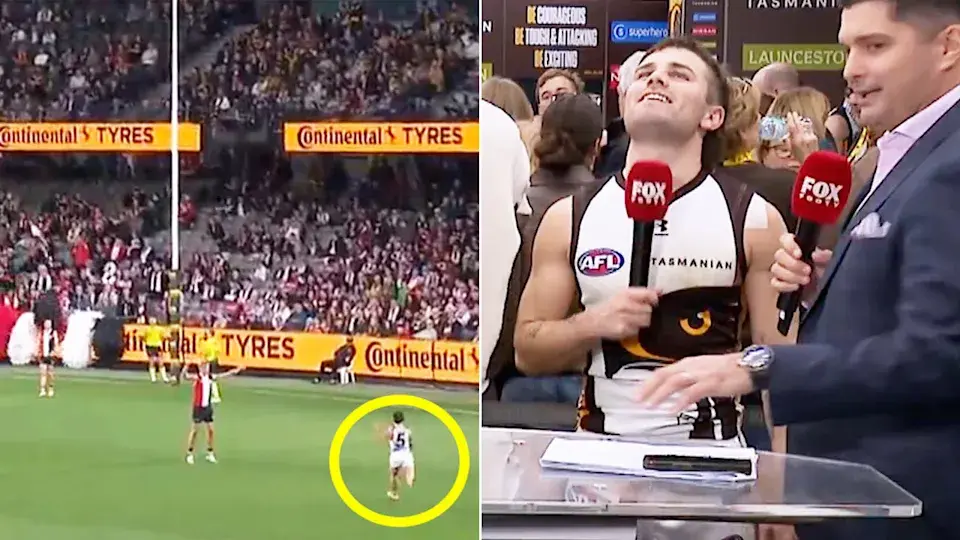
Hawthorn coach Sam Mitchell did not hide his frustration in the post-match press conference. He confirmed the club would formally ask the AFL for an explanation, describing the decision as one that lacked common sense. “Why would he run wider to give himself a harder shot and it get called play on?” Mitchell asked. “There’s no common sense about that.” The coach accepted that the umpire makes the call on the night but expressed hope that the league would provide clarity and, where necessary, adjust interpretations that feel overly pedantic in practice.
The criticism did not stop with the coach. AFL legend Jason Dunstall was scathing in his assessment on Fox Footy, labelling the decision “ridiculous” and “crazy.” He pointed out that Watson had gained no advantage whatsoever by the tiny movement and questioned the purpose of a rule designed to stop players from improving their angle when no improvement had occurred. “Half a step off that line, you’re gone. It’s ridiculous. I’m baffled by it,” Dunstall said, echoing the sentiments of many supporters and commentators who watched the replays repeatedly.
Other media voices described it as an “extraordinary umpiring error” and a “really, really bad decision,” particularly given the context of a 52-point Hawthorn victory that rendered the goal irrelevant to the final result.
Watson, still developing his media presence at just 21, chose his words carefully. He told reporters he would “cop it on the chin” and admitted he thought he had run straight, though he stopped short of directly criticising the umpire. The young star has been in outstanding form throughout 2026, establishing himself as one of the competition’s most dangerous small forwards and attracting early All-Australian speculation. On a night when he finished with multiple goals and was heavily involved in Hawthorn’s attacking surges, the disallowed score stood out as the one sour note in an otherwise impressive team performance.
By Friday afternoon the AFL had moved to close down the debate. In a statement released to media, the league said the umpire “was correctly positioned behind the kick and correctly disallowed the score after Nick Watson moved off his line to the right and didn’t kick the ball over the man on the mark.” Both Hawthorn and St Kilda were contacted directly to receive the explanation. There was no concession that the call had been marginal or that greater tolerance might be applied in future.
The message was clear: the laws had been applied as written, and the AFL stood behind its officials.
The incident has reignited familiar conversations about the balance between precise rule enforcement and the spirit of the game. Supporters on social media and talkback radio have been divided. Some argue that umpires must apply the laws consistently regardless of the scoreline or the stage of the match; others contend that when the deviation is so small and no advantage is gained, especially after the siren in a blowout, a more pragmatic approach serves the game better.
The fact that the call came in a contest Hawthorn won comfortably only sharpened the sense among critics that the decision felt unnecessarily fussy.
Hawthorn’s strong season has continued regardless. The 52-point win lifted them to third on the ladder with an impressive percentage, keeping them firmly in premiership calculations. Watson’s individual brilliance has been a major factor in that rise. His ability to create something from nothing, combined with his finishing under pressure, has made him one of the most exciting players to watch in 2026. The disallowed goal will not define his season, but it has added another layer to the ongoing scrutiny of how umpiring decisions are made and explained at the elite level.
As the dust settles a few days later, the AFL’s position remains unchanged. No further review or adjustment to the interpretation of the rule has been signalled. The Hawks received their explanation and the matter has been formally closed at an official level. Yet the images of Watson’s kick sailing through the posts, followed by the abrupt reversal, continue to circulate and fuel discussion among fans who believe the game sometimes suffers when it is officiated too literally.
For Watson and Hawthorn, the focus has already shifted to the next challenge, but the debate over where the line between pedantry and necessary precision should be drawn is unlikely to disappear any time soon.