
Christopher Bell’s Empathy Shines After Chase Elliott Crash at FireKeepers Casino 400
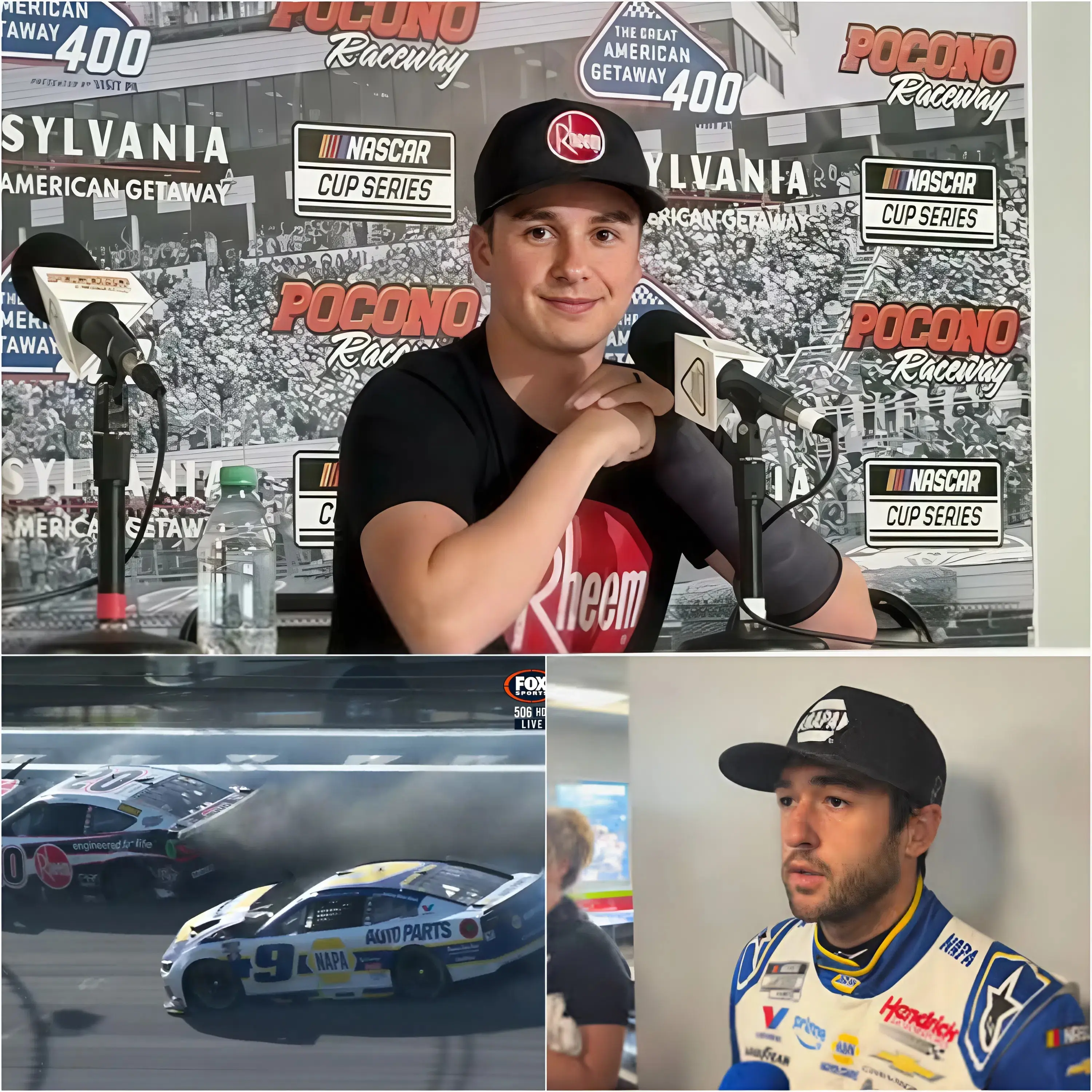
In the high-stakes world of NASCAR Cup Series racing, where split-second decisions can define careers and championships, moments of genuine human connection often stand out amid the roar of engines and the chaos of competition. Such was the case during the recent FireKeepers Casino 400 at Michigan International Speedway, where a fierce on-track battle between Christopher Bell and Chase Elliott ended in a violent crash that not only tested the limits of driver safety but also highlighted the deep respect and camaraderie that exists within the garage.
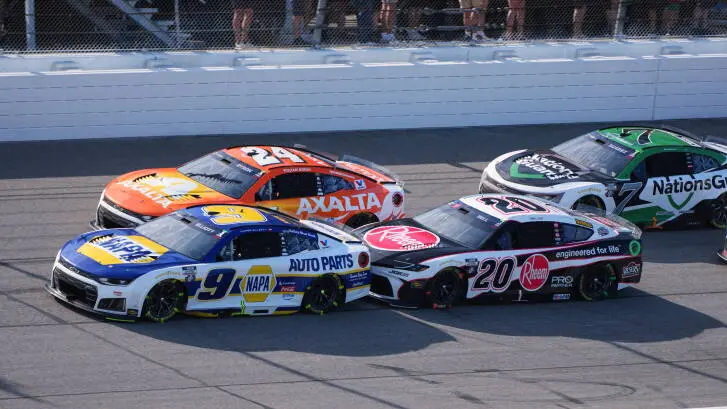
The incident unfolded on lap 149 of the race as Elliott, piloting the No. 9 Hendrick Motorsports Chevrolet, and Bell in the No. 20 Joe Gibbs Racing Toyota battled side-by-side for position in the final stage. Elliott, who had dominated much of the afternoon by winning Stage 2 and leading a significant number of laps, got loose coming out of a turn. His car slid up the track, making contact with Bell’s Toyota and sending both drivers hard into the outside wall.
The impact was severe enough to damage the SAFER barrier, prompting a red flag that halted the race for repairs and allowed safety crews to assess the scene.
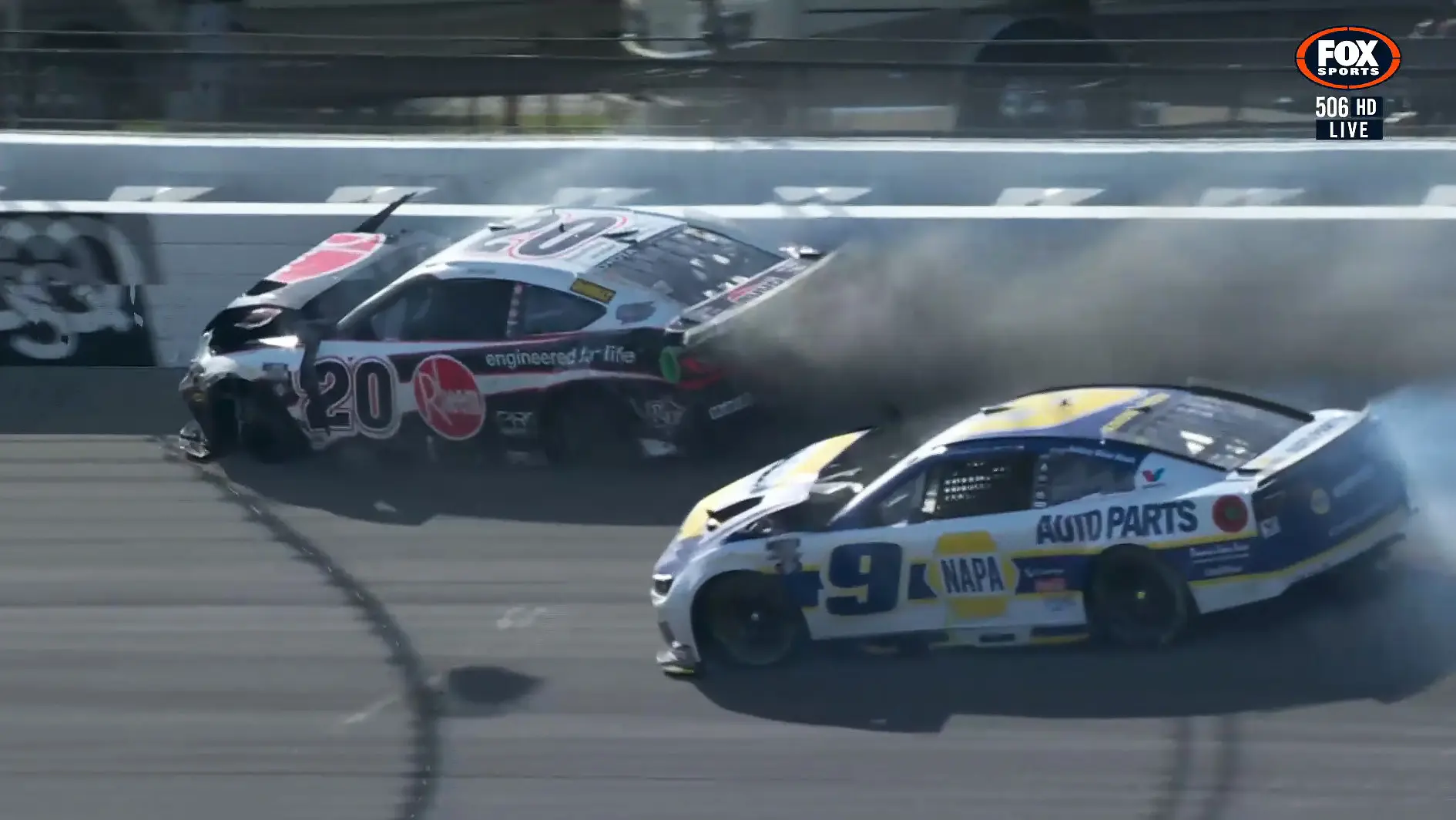
Both drivers walked away from their heavily damaged cars, a testament to the advancements in NASCAR safety technology. Elliott immediately made his way over to Bell on the track, where the two shared an embrace. In post-race comments, Elliott took full responsibility for the wreck, expressing deep regret. “It was totally my fault,” he said. “I feel really bad for Bell, just taking him out. I was trying to run the bottom, make use of our fresh tires…
but I stepped over the line and paid for it.” His words carried the weight of a driver who understands the frustration of seeing a strong run end abruptly due to an error.
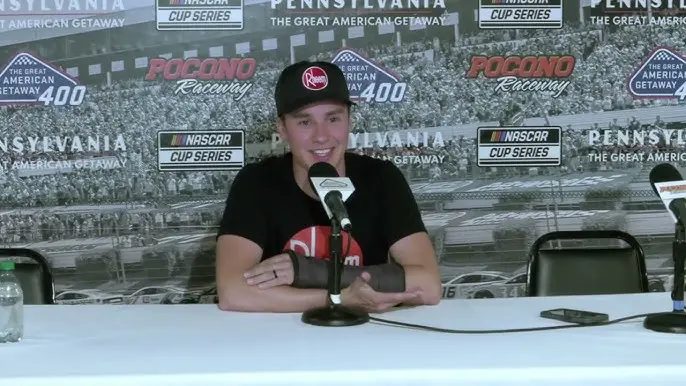
Christopher Bell, who absorbed the brunt of the hit—one of the hardest recorded in recent NASCAR history—responded with remarkable grace and empathy. In reflecting on the moment, Bell shared a sentiment that resonated deeply with fans and fellow competitors alike: “I know how terrible that feels… because one small mistake can destroy everything you’ve built all weekend in seconds.” His words captured the precarious nature of the sport, where hours of preparation, strategy sessions, and flawless execution on the track can vanish in an instant.
Bell emphasized that the most painful moments in a driver’s career rarely stem from mechanical failures or team shortcomings but from those irreparable human errors that linger long after the checkered flag.
This display of sportsmanship did not go unnoticed. Reports quickly circulated that just two minutes after the crash, Chase Elliott reached out to Bell with a heartfelt thank-you message. The gesture, though private, soon echoed throughout the NASCAR community, symbolizing the mutual respect between two of the sport’s most talented and dedicated competitors. In an environment often defined by intense rivalries and the pressure to perform, such exchanges serve as powerful reminders of the brotherhood that binds drivers together.
The crash came at a critical juncture in the 2026 season. Elliott entered the race strong in the points standings, while Bell had been building momentum with consistent top finishes. The Michigan incident sidelined both for the remainder of the event, with Denny Hamlin ultimately taking the victory. Bell later revealed he suffered a fractured left wrist from the impact but was determined to return to competition. At the following race weekend, he was back behind the wheel, adapting with a modified steering wheel and racing one-handed—a display of resilience that further endeared him to fans.
For Elliott, the aftermath brought a mix of relief and reflection. He continued to check in on Bell in the days following the wreck, underscoring a level of concern that went beyond the immediate on-track apology. NASCAR insiders noted how these interactions highlighted the evolution of the sport’s culture, where accountability and empathy are increasingly valued alongside raw speed and aggression.
The FireKeepers Casino 400 crash also reignited conversations about the Next Gen car’s handling characteristics, particularly in high-speed, bump-laden tracks like Michigan. While safety features performed admirably, preventing serious injuries despite the 63G impact forces, some drivers voiced concerns about the cars’ tendency to get loose under certain conditions. Bell and Elliott’s willingness to discuss the event openly contributed to ongoing efforts to refine the machinery and improve racing safety.
Beyond the technical and competitive aspects, the story of Bell and Elliott’s exchange offers a broader lesson for the NASCAR community and sports enthusiasts worldwide. In a high-pressure profession where mistakes are magnified under the spotlight, the ability to extend grace and understanding can be as impactful as any victory. Bell’s empathy reminded everyone that behind the helmets and fire suits are individuals who share the same vulnerabilities—the fear of letting down their teams, sponsors, and fans with one errant move.
As the season progresses toward the playoffs, both drivers will look to put the Michigan disappointment behind them. Elliott, a veteran with a championship pedigree, has the experience to rebound strongly, while Bell’s determination in the face of injury positions him as a formidable contender. Their on-track rivalry remains respectful, a dynamic that elevates the entire field.
The heartfelt thank-you message from Elliott to Bell, though brief, has become a talking point that transcends the results sheet. It humanizes the sport, showing that even in defeat and disappointment, drivers like these two prioritize relationships and mutual support. Fans have flooded social media with praise for their professionalism, reinforcing the idea that NASCAR’s appeal lies not just in the thrilling action but in the stories of perseverance and camaraderie that emerge from adversity.
In the end, the FireKeepers Casino 400 will be remembered for more than just the dramatic crash or the red flag. It will stand as a moment where Christopher Bell articulated the shared struggles of every racer, and Chase Elliott responded with gratitude and accountability. In a sport that demands perfection yet forgives through understanding, these qualities ensure that the human element remains at the heart of NASCAR’s enduring legacy. As the next races unfold, the community will watch with anticipation to see how these resilient competitors channel their experiences into future successes on the track.