
HOPE FOR A MIRACLE FOR HER
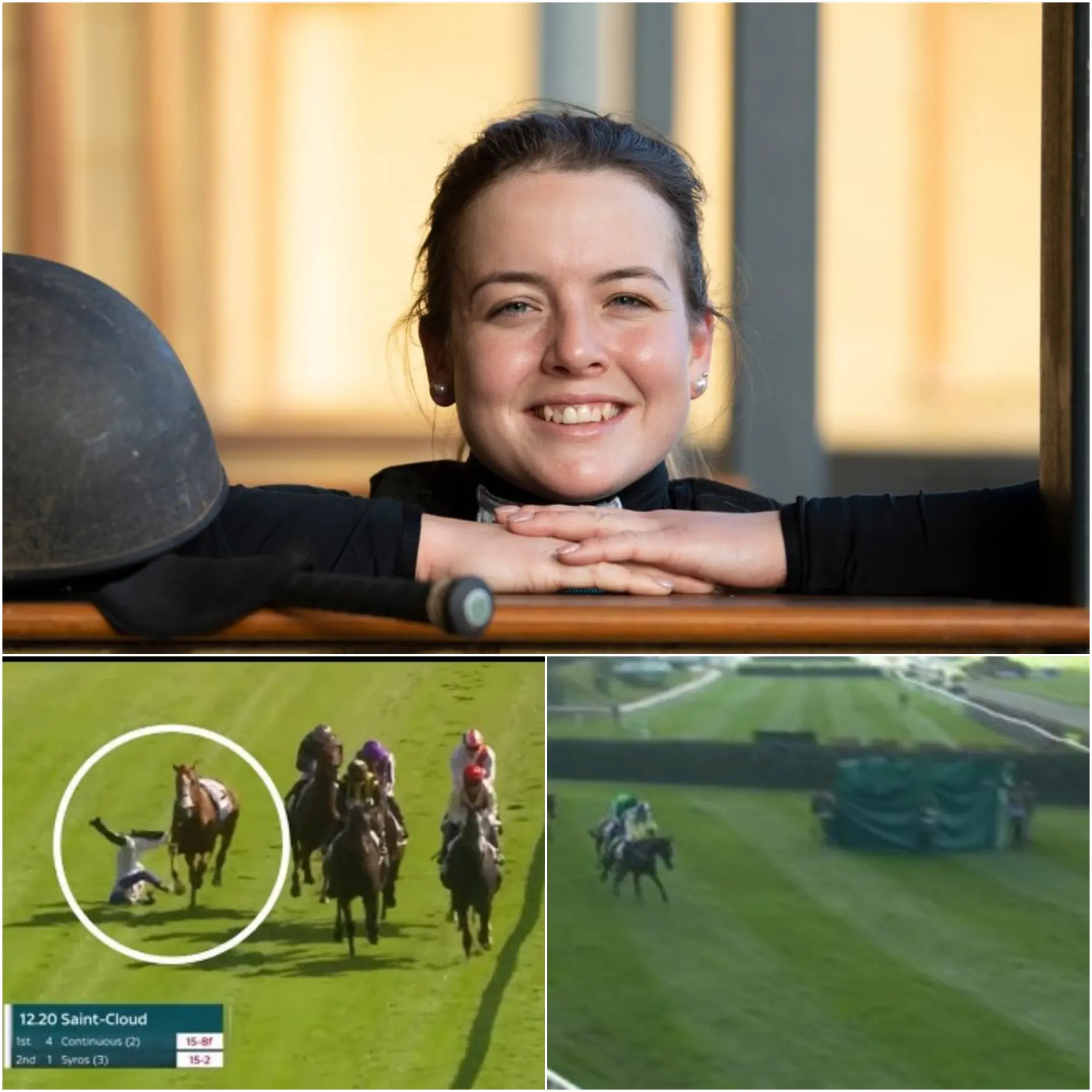
In the high-stakes world of jump racing, where split-second decisions can mean the difference between victory and disaster, few moments capture the raw danger and fragility of the sport like what happened to British jockey Page Fuller on a September afternoon in 2022 at Fontwell Park. Riding Touchthesoul in a 2m2f handicap chase, Fuller was approaching the first fence when everything changed in an instant. She lost vision in her right eye, felt intense pain and spasms in her right arm, and moments later pulled the horse up after clearing the obstacle.
What appeared to onlookers as a sudden mechanical issue or hesitation was, in reality, the onset of a terrifying medical emergency: a mini-stroke, or transient ischemic attack (TIA), that struck her mid-race.
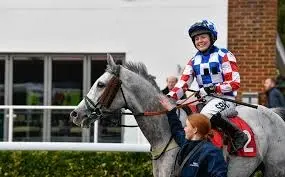
Fuller, then 27, had been building a promising career in National Hunt racing. Known for her determination and skill over fences, she had notched up respectable wins and was gaining recognition in a field still dominated by male riders. The incident not only interrupted her momentum but raised immediate questions about her future in the saddle. Doctors later confirmed the mini-stroke, and scans revealed the shocking minor cause that stunned the equestrian community: it stemmed from an earlier fall.
A previous heavy crash had caused a small tear or damage in her neck area, likely leading to a dissection in the carotid artery. This dissection allowed a clot to form and travel to her brain, triggering the stroke just as she was navigating the course at full speed.
The revelation sent ripples through the racing world. Jockeys routinely endure falls, concussions, and broken bones, but the idea that a seemingly routine spill could silently set the stage for such a catastrophic event during a race was sobering. Medical experts emphasized that carotid artery dissection is rare but can be triggered by trauma, including whiplash-like impacts from falls. In Fuller’s case, the timing was cruel—her body held together long enough for her to jump the first fence safely, but the symptoms hit precisely when precision and awareness were most critical.
She managed to pull Touchthesoul up without further incident, a testament to her instincts even under duress, but the damage was done. Hospitalized in Swindon, she spoke candidly to racing media about the terrifying experience: coming into the fence, her vision blacked out on one side, and panic set in as she fought to maintain control.
The immediate aftermath was filled with uncertainty. Fuller lost functional use of her right arm temporarily, and the vision loss in her right eye persisted, raising fears that her riding days might be over. The equestrian community rallied around her, with fellow jockeys, trainers, and fans expressing shock and support. Messages poured in highlighting her grit and the broader risks female jockeys face in a physically demanding sport. For weeks, her condition remained the talk of racing forums and publications, with many wondering if she would ever return to competitive riding.
Remarkably, Fuller defied the odds. After months of intensive rehabilitation, physiotherapy, and medical clearance, she made a comeback. In February 2023, just five months after the incident, she returned to the track at Hereford, finishing fourth in her ride—a moment met with widespread relief and admiration. She described the day as emotional, smiling broadly in post-race interviews as she savored being back among the horses she loved. The return signaled hope that she could rebuild her career, and for a time, it seemed possible.
She spoke about the challenges of regaining strength, adapting to any lingering effects, and the mental hurdle of trusting her body again at high speeds over jumps.
However, the road proved more arduous than anticipated. Another head injury followed relatively soon after her initial recovery, compounding the setbacks. The cumulative impact of the stroke, rehabilitation, and subsequent trauma took its toll. By late 2023 and into subsequent years, Fuller faced ongoing health struggles that made sustained competitive riding increasingly difficult. In a poignant announcement shared on Racing TV’s Luck on Sunday program, she revealed her decision to retire from the saddle. The choice was not made lightly; it came after deep reflection on her health, future quality of life, and the risks that had become too great.
She expressed gratitude for the career she had pursued, the horses she had partnered with, and the people who supported her through the darkest times.
Fuller’s story resonates far beyond the racing world. It highlights the hidden dangers of concussion and trauma in contact-heavy sports, the resilience required of athletes—particularly women breaking barriers in male-dominated fields—and the thin line between triumph and tragedy. While she no longer rides professionally, her legacy endures as an inspiration. Supporters continue to speak of her courage, with some in the community still holding out hope for a “miracle” in her ongoing recovery and well-being.
Today, as the sport evolves with better safety protocols, medical screenings, and awareness of conditions like arterial dissection, Fuller’s experience serves as a stark reminder. What began as a routine race became a life-altering event, yet her determination to fight back, return briefly, and then gracefully step away demonstrates the same strength that made her a respected jockey. The equestrian world wishes her every happiness in whatever path she chooses next, forever marked by the day hope hung in the balance at that first fence.