
Tensions erupted across parts of England after violent disorder broke out near hotels housing asylum seekers in Rotherham and Tamworth, sending shockwaves through communities already strained by polarized debate over immigration policy. What began as protests quickly escalated into clashes between masked demonstrators and police, with fireworks, bricks, and makeshift barricades turning busy streets into chaotic flashpoints. Authorities moved swiftly to contain the unrest, while national leaders urged calm amid mounting concern about public safety and social cohesion.
Police confirmed that disturbances intensified late Friday afternoon, with officers facing coordinated attempts to breach security perimeters around accommodation sites used for newly arrived migrants. Eyewitnesses described crowds surging forward, some masked, others shouting slogans critical of government immigration strategy. Law enforcement units formed defensive lines to prevent access to buildings, prioritizing the safety of residents and staff. Despite dramatic online claims, officials cautioned against inflated figures and emphasized that investigations are ongoing to establish an accurate account of events.
At approximately 5:10 p.m., according to local reports, officers began receiving multiple emergency calls about projectiles being thrown and barriers overturned. Videos circulating on social media show flares lighting up the sky and groups pushing against police shields. Emergency vehicles were temporarily rerouted as authorities sought to stabilize the situation. Senior officers later stated that while several injuries were reported among police personnel, there was no verified evidence of large-scale structural collapse or entire districts falling out of control, contrary to viral narratives.
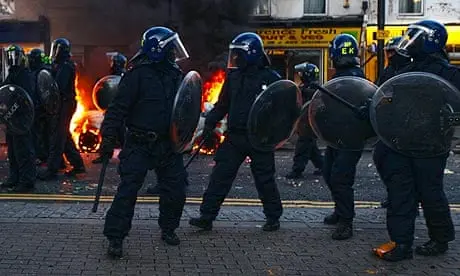
Residents interviewed near the scenes spoke of fear and frustration. Some expressed anger about the pace of asylum processing and the use of hotels as temporary housing. Others condemned the violence outright, warning that destructive protests undermine legitimate debate. One local shop owner said the noise and confusion were unlike anything he had witnessed before, adding that he worried about the long-term impact on community trust. Community leaders from multiple backgrounds appealed for dialogue rather than confrontation.
The broader political context has intensified scrutiny of Keir Starmer, whose government faces mounting pressure over border management and asylum accommodation. Critics argue that existing policies have strained local resources, while supporters contend that complex international obligations and humanitarian commitments limit rapid solutions. Officials close to the Prime Minister insist that enforcement against criminal networks involved in irregular migration remains a priority, and they reject characterizations of a so-called open-border stance.
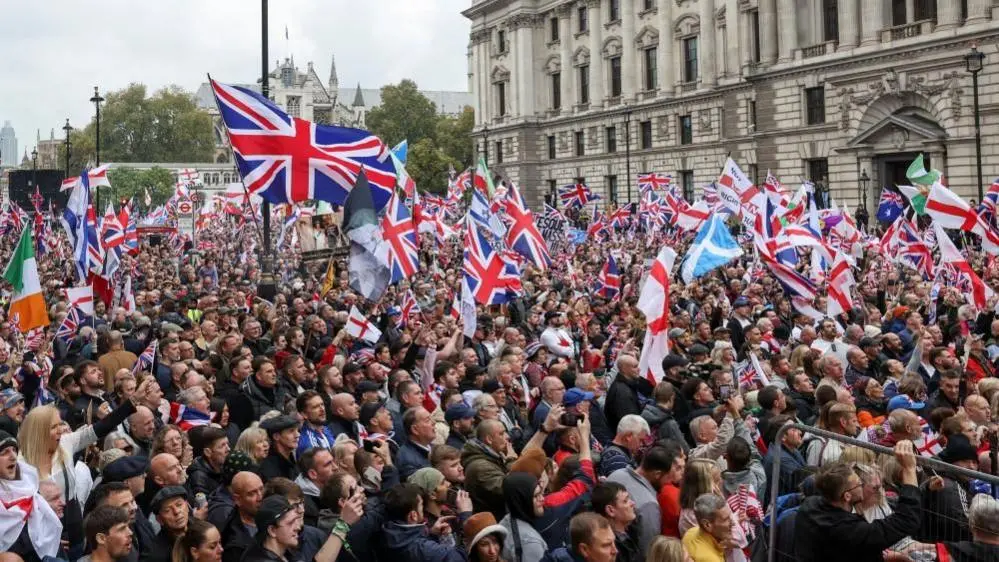
Law enforcement agencies deployed additional units from neighboring regions to reinforce local teams. A spokesperson for the regional police service stated that maintaining order while safeguarding lawful protest rights presents a delicate balance. Officers were instructed to use proportionate tactics, focusing on dispersal and targeted arrests of individuals engaged in violence. Authorities confirmed that several suspects were detained on charges ranging from public disorder to assaulting an emergency worker, though official numbers remain subject to verification as investigations continue.
Security analysts note that online amplification played a significant role in escalating tensions. Clips shared within minutes portrayed dramatic scenes, often stripped of context, fueling emotional reactions nationwide. Some posts framed the unrest as evidence of systemic failure, while others urged restraint and fact-checking. Experts warn that digital platforms can magnify anger, especially when footage is edited or presented without confirmation. Government officials have urged the public to rely on verified information from police briefings rather than unverified accounts.
Community organizations representing migrant residents reported heightened anxiety among families housed in the targeted hotels. Volunteers described children frightened by the noise of explosions and chanting outside. Human rights advocates stressed that asylum seekers are often fleeing violence themselves and should not be conflated with broader crime trends. Meanwhile, several local residents insisted their grievances center on resource allocation and public safety rather than hostility toward individuals, underscoring the complex mix of economic and social pressures at play.
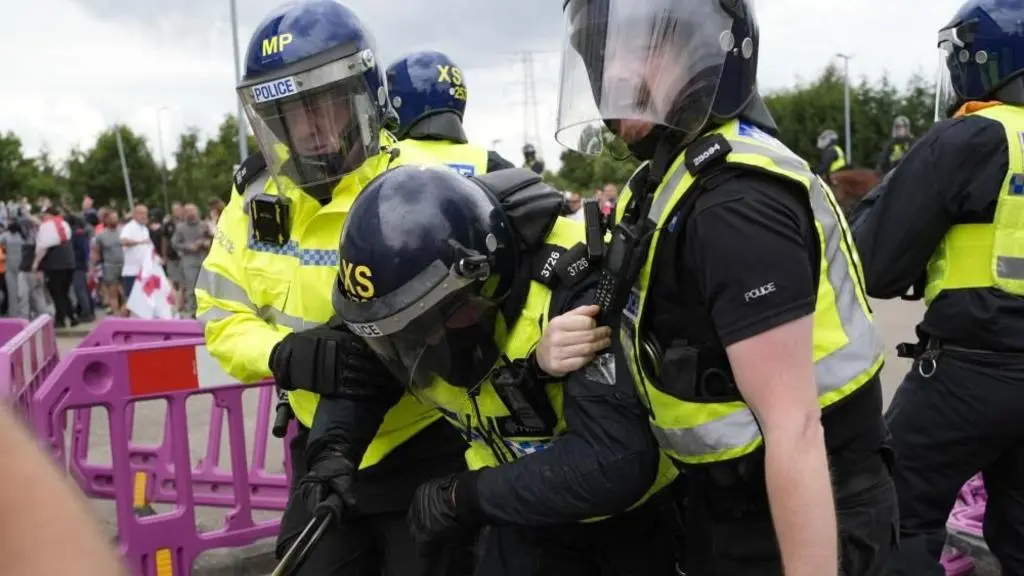
Political commentators caution against narratives suggesting national collapse or imminent anarchy. While the images are stark, they emphasize that Britain’s institutions remain functional and capable of responding to unrest. Parliamentarians across party lines condemned violence and called for renewed focus on practical solutions, including faster asylum processing and clearer communication with host communities. Economists note that unresolved migration backlogs can exacerbate local tensions, but they argue that sustainable policy requires coordination across domestic agencies and international partners.
As night fell, police reported that streets in both Rotherham and Tamworth were gradually cleared, though patrols remained in place to prevent further disorder. Cleanup crews began assessing damage to storefronts and public property. Investigators are reviewing video evidence to identify individuals responsible for criminal acts. Officials reiterated that peaceful protest is lawful, but violence will be met with prosecution. The coming days are expected to bring further statements from government leaders, as well as renewed debate over immigration management.
The events have reignited discussion about how best to address concerns over migration while protecting social harmony. Analysts suggest that transparent communication, community engagement, and timely policy reforms are critical to preventing future flare-ups. While the scenes of confrontation have dominated headlines, many residents expressed hope that constructive dialogue can replace confrontation. The situation remains fluid, but authorities insist that restoring calm and rebuilding trust across affected neighborhoods is the immediate priority as Britain navigates another moment of intense public scrutiny.