
Two Australian teenagers have unexpectedly become central figures in a rapidly intensifying national debate, after initiating legal action that challenges how far the state can go in regulating young people’s access to digital spaces in the name of safety.
Fifteen-year-olds Noah Jones and Macy Neyland, supported by the Digital Freedom Project, have lodged an urgent constitutional application with the High Court of Australia, questioning the legality of a nationwide restriction on social media access for users under sixteen.
The organization backing them is described as a digital rights advocacy group with links to state-level political leadership in New South Wales, lending the case an added layer of institutional credibility and public attention from its very first hours.
At the heart of the filing is a claim that the restriction infringes upon implied constitutional freedoms, including political communication, access to information, and equal treatment under the law, particularly as these principles apply in an increasingly digital society.
According to the applicants, social media platforms are not merely entertainment tools, but essential spaces for learning, civic engagement, and social connection, especially for younger Australians growing up in geographically and socially diverse environments.
Their statement argues that the policy draws a sharp age-based line without sufficient evidence that such a broad prohibition is necessary, proportionate, or effective in achieving its stated goals of protecting minors.
The case directly names the federal Minister for Communications, the Commonwealth Government, and the eSafety Commissioner, signaling a comprehensive challenge to both legislative intent and regulatory enforcement mechanisms.
In a carefully worded public declaration, the teenagers questioned what they described as an apparent double standard in digital regulation, suggesting that harmful online behavior is not confined to any single age group.
They emphasized that many adults continue to misuse online platforms in ways that cause demonstrable harm, while younger users who rely on these tools for education and connection face exclusion through blanket restrictions.
Within minutes of the filing becoming public, the issue began trending across multiple platforms, reflecting how deeply digital policy now intersects with everyday life, identity, and generational experience in contemporary Australia.
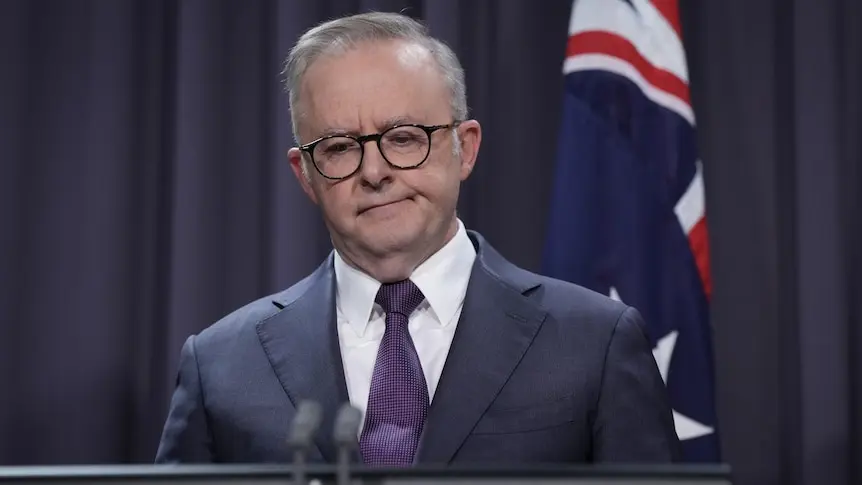
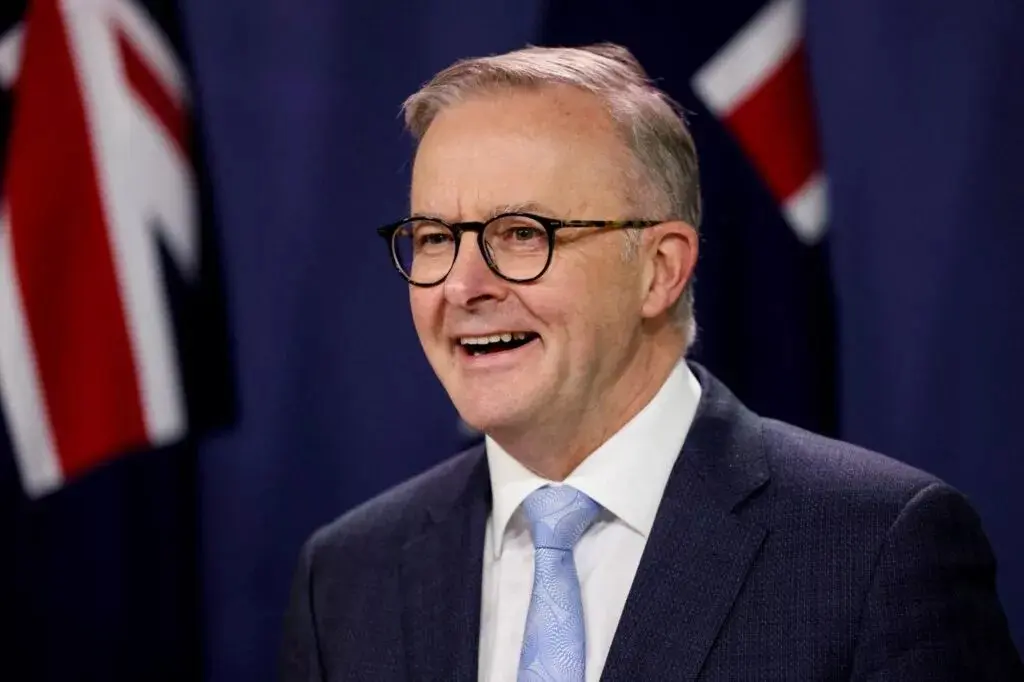
Roughly half an hour after reports of the application emerged, Prime Minister Anthony Albanese responded publicly, underscoring the government’s commitment to child safety while defending the intent behind the policy.
His remarks, firm yet measured, stressed that the government viewed the regulation as a protective measure rather than a punitive one, framing it as part of a broader responsibility to safeguard young Australians online.
That response, however, appeared to further intensify public discussion, with commentators, parents, educators, and digital rights advocates quickly dividing along philosophical and generational lines.
Supporters of the restriction argue that social media environments expose minors to risks ranging from harmful content to exploitation, and that the state has a duty to intervene where private platforms have failed.
They often cite mental health concerns, cyberbullying statistics, and the opaque nature of platform algorithms as justification for stronger regulatory action targeting underage users.
Opponents counter that access bans oversimplify complex problems, potentially pushing young people toward unregulated or less transparent digital spaces rather than addressing underlying issues directly.
Legal scholars observing the case note that it raises difficult constitutional questions, particularly around how traditional freedoms are interpreted when political discourse and social interaction increasingly occur online.
Australia’s constitution does not explicitly guarantee freedom of speech, but High Court precedent has recognized an implied freedom of political communication essential to democratic participation.
Whether and how that principle extends to minors using digital platforms remains an open and contentious question, one that this case may help clarify for future policy development.
Another point of contention lies in enforcement, with critics asking how age verification would be implemented without compromising privacy or creating new forms of data collection and surveillance.
Technology experts warn that poorly designed verification systems could introduce vulnerabilities, disproportionately affect marginalized groups, or normalize invasive identity checks across the internet.
Parents’ groups have expressed mixed reactions, with some welcoming clearer boundaries for children online, while others worry that exclusion may limit digital literacy and supervised learning opportunities.
Educators have also entered the discussion, noting that many classrooms already integrate social platforms for collaboration, information sharing, and engagement with current events.
From this perspective, a strict age-based ban could create inconsistencies between educational practice and national regulation, complicating efforts to teach responsible digital citizenship.
The teenagers at the center of the case have largely remained out of the media spotlight, with representatives emphasizing that their focus is on principles rather than personal attention.
Their legal team has framed the application as a request for constitutional clarity, not a rejection of safety, arguing that rights and protection should not be treated as mutually exclusive.
International observers have taken note, as governments worldwide grapple with similar questions about youth, technology, and state intervention in digital life.
Some countries have opted for platform accountability and design changes, while others explore parental controls, education programs, or targeted enforcement against harmful content.
Australia’s approach, now under judicial scrutiny, may influence how democratic societies balance precaution with participation in the digital age.
The High Court has not yet indicated whether it will fast-track hearings, but the urgency of the filing suggests the applicants seek swift consideration given the policy’s immediate impact.
In the meantime, public debate continues across traditional media and online forums, often reflecting broader anxieties about technology, generational change, and trust in institutions.
Civil liberties organizations argue that young people deserve a voice in decisions that shape their future, especially when those decisions affect how they communicate and learn.
Others maintain that adulthood thresholds exist precisely because children require additional safeguards, even if those safeguards sometimes feel restrictive or unpopular.
What makes this case distinctive is not only the age of the applicants, but the clarity with which it exposes unresolved tensions between protection, autonomy, and equality.
As Australia watches the legal process unfold, the outcome may redefine how digital rights are understood, not just for teenagers, but for all citizens navigating life online.
Regardless of the court’s eventual ruling, the challenge has already succeeded in forcing a national conversation about who decides the boundaries of the digital public square.
In an era where online spaces increasingly shape identity, opportunity, and democratic engagement, that conversation is unlikely to fade anytime soon.