
Are the Blue Jays about to get a new ‘monster’?”

The Toronto Blue Jays’ farm system has long been a source of talent that has helped shape the major league roster, but few prospects have generated as much buzz in recent weeks as Sean Keys. The 23-year-old third baseman and first baseman is putting together a breakout 2026 minor league season that has fans and analysts alike wondering whether the organization is on the verge of promoting its latest power-hitting “monster” to the big leagues.

Keys, selected by the Blue Jays in the fourth round of the 2024 MLB Draft out of Bucknell University, has always possessed impressive raw power. Standing 6-foot-1 or 6-foot-2 and weighing around 225-232 pounds, the left-handed hitter combines a physical frame with an advanced approach at the plate. His college career culminated in a dominant senior season where he slashed .405/.535/.798 with 13 home runs, earning Patriot League Player of the Year honors. That performance, coupled with strong showings in summer leagues, convinced Toronto to invest in him as a high-upside bat.
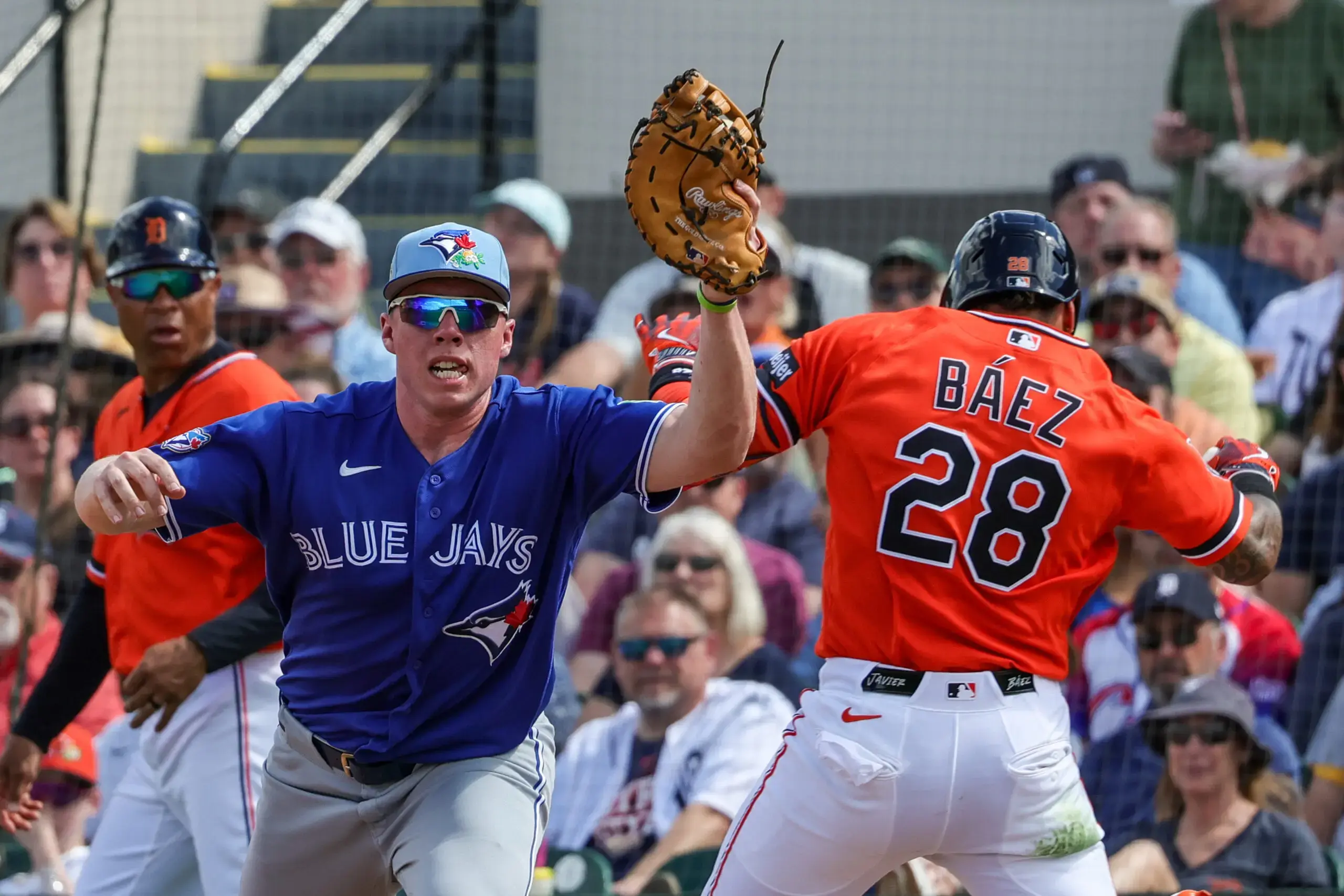
After signing and making his professional debut with limited action in Single-A Dunedin in 2024, Keys faced the challenges of full-season ball in 2025 with High-A Vancouver. He posted a respectable but uneven line of .217/.365/.408 with 19 home runs, showing flashes of his power while struggling at times against higher-velocity pitching. Those experiences appear to have fueled significant growth. In 2026, Keys has transformed into one of the most dominant hitters across the Blue Jays’ minor league affiliates.
Through approximately 231 at-bats this season, primarily split between Double-A New Hampshire and Triple-A Buffalo, Keys has delivered elite production: 20 home runs, 52 RBIs, seven stolen bases, a .286 batting average, .411 on-base percentage, and a 1.026 OPS. His performance at the Triple-A level has been particularly eye-catching, where he has slashed around .288/.408/.712 with six home runs in a small sample of games since his recent promotion. These numbers place him among the most efficient offensive players in the minors, with underlying metrics that include strong exit velocities often exceeding 109 mph.
What stands out most about Keys’ game is his ability to drive the ball with authority without selling out for power. Scouts describe him as a thick, barrel-chested hitter whose swing features an uphill path designed for over-the-fence production. He makes consistent contact and has improved his plate discipline, as evidenced by a solid walk rate and the ability to handle different pitch types. His power is legitimate, graded as plus or better by evaluators, and it plays well to all fields. This combination of hit tool refinement and raw thump has turned him into a legitimate breakout candidate.
Defensively, Keys has primarily played third base, where his above-average arm strength is an asset. However, questions remain about his range and footwork at the hot corner due to his size and speed profile, which is considered below average. The Blue Jays have begun experimenting with him at first base and potentially other spots to increase his versatility, a common developmental strategy for corner infielders with bat-first profiles. Manager John Schneider has reportedly taken notice, hinting at creative ways to incorporate Keys’ bat into the major league lineup if called upon.
The timing of Keys’ surge could not be more critical for a Blue Jays team navigating the 2026 season. Toronto’s major league roster has shown a need for additional right-handed power and offensive depth, particularly at the corner infield positions. With the trade deadline approaching and the club fighting for positioning in a competitive American League East, promoting a prospect like Keys could inject much-needed energy and production. Fans on social media and in forums are already clamoring for his debut, drawing comparisons to past Blue Jays power prospects who made immediate impacts.
Of course, the path to the majors is rarely straightforward. Keys will need to continue proving himself against Triple-A pitching, which often features more refined command and sequencing. Adjustments at the big league level come quickly, and his defensive limitations may require the organization to find the right fit—whether as a primary third baseman, a 1B/3B utility option, or even occasional DH work. His rule-5 eligibility is still years away, giving the Blue Jays flexibility to develop him further if needed, but his current trajectory suggests he may not require much more minor league seasoning.
Beyond the numbers, Keys represents the type of player Toronto has prioritized in recent drafts: college hitters with polished approaches and significant physical projection. His story from a mid-major program like Bucknell to a top prospect in one of baseball’s most storied organizations underscores the value of scouting and player development. As he continues to mash in Buffalo, the pressure on Blue Jays management to accelerate his timeline will only intensify.
For now, Sean Keys is focused on the daily grind of Triple-A ball, refining his approach and helping the Bisons compete. But the whispers are growing louder. If his power keeps translating and he maintains his disciplined plate presence, the Blue Jays could soon have a new “monster” in their lineup—a young slugger ready to make his mark at Rogers Centre. Whether that call-up comes in the coming weeks or later this season, Keys has positioned himself as one of the most exciting stories in Toronto’s farm system.
The Blue Jays have a history of successfully integrating homegrown talent into their contending windows. Players like Vladimir Guerrero Jr. and Bo Bichette set high standards, but the next generation, including Keys, offers hope for sustained contention. As the 2026 season unfolds, all eyes will remain on the 23-year-old’s progress. If he sustains this level of production, Toronto fans may soon be cheering for their newest power threat in the big leagues.